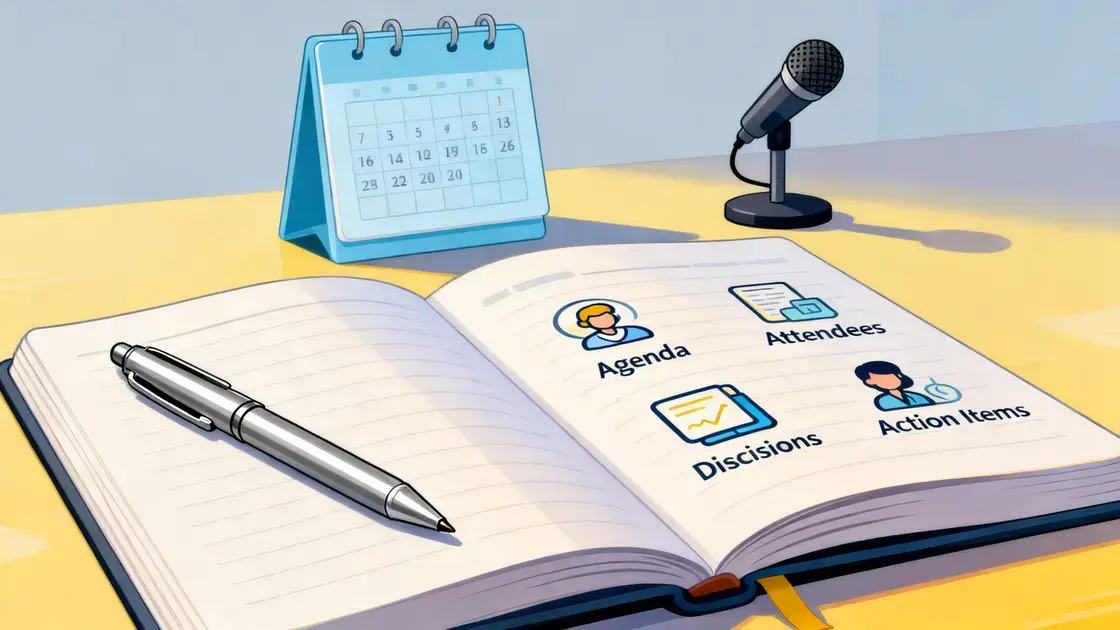
Effective meeting minutes keep everyone aligned and serve as a reliable reference for decisions and actions. Meeting note organization, clear summaries, and highlighting action items greatly impact productivity.
A well-prepared minute taker finds it easier to capture discussions, from attendance to action assignments. Great minutes support business growth and clarify outcomes.
Continue reading for surprising insights into capturing flawless meeting minutes and improving teamwork.
Understanding the Importance of Meeting Minutes
Taking meeting minutes might seem routine, but their impact on team alignment and accountability is profound. Minutes transform fast-paced discussions into an enduring record, capturing essential conversations, decisions, and action items. This documentation goes far beyond mere note-taking—it’s the backbone of organizational memory.
Well-crafted meeting minutes help everyone stay informed, especially those unable to attend. They are a reference point for past decisions, prevent disputes over what was agreed upon, and ensure that responsibilities and deadlines are crystal clear. This shared clarity empowers every team member to move forward confidently.
By valuing meeting minutes, you contribute to a culture of transparency and follow-through. It demonstrates professionalism, keeps projects on track, and builds trust within your team—an often overlooked but vital ingredient of success.
Pre-Meeting Preparation for Successful Minute Taking
Preparation is the secret weapon for writing meeting minutes that are clear, accurate, and valuable. Before the meeting even begins, a few steps can transform your note-taking from frantic scribbling to confident, focused listening.
Start by reviewing the agenda and becoming familiar with the topics to be discussed. This will help you anticipate key points and identify which sections will demand the most attention. If possible, coordinate with the meeting organizer to clarify any expectations for the minutes.
- Bring any previous meeting minutes for reference
- Prepare a template based on the agenda
- Know who will attend and any special guests
- Set up your note-taking tools (laptop, paper, or preferred app)
With thoughtful preparation, you’ll feel more at ease, ready to capture every important detail, and fully support your team’s progress.
Key Components: What to Include in Meeting Minutes
To create meeting minutes that are genuinely useful and actionable, you need more than a plain summary of what was said. Every set of professional minutes should provide a structure that makes follow-up easy and ensures clarity for all participants.
- List the date, time, and location of the meeting
- Record attendance, noting anyone absent or arriving late
- Summarize agenda items discussed, highlighting decisions and relevant debates
- Clearly state all action items, assigning responsibilities and deadlines
- Include any motions, votes, or decisions made
- Mention upcoming meeting dates or next steps
Carefully chosen details help the minutes become a reliable, accessible record. By focusing on what matters most—decisions, actions, and responsibilities—you make it easier for your team to track progress and stay aligned.
Step-by-Step Process to Write Effective Meeting Minutes
Writing effective meeting minutes is about more than documenting what happened—it’s about capturing the heart of decision-making and future action. Begin by documenting basic meeting details as soon as possible. Note who is present, the agenda topics covered, and the outcomes and assignments arising from each discussion.
As you listen, focus on summarizing key points rather than scripting every word. Keep your notes objective and concise. Mark important decisions, open issues, and action items with responsibilities and deadlines to make follow-up simple.
- Keep different agenda topics separated for clarity
- Highlight motions, approvals, and assignments
- Review notes quickly post-meeting to fill gaps while details are fresh
Taking a calm and organized approach transforms your minutes from mere notes into a reliable resource for future reference and project success.
Formatting Tips for Clarity and Consistency
Consistent formatting brings order and professionalism to your meeting minutes, transforming a basic document into a resource everyone can rely on. Using heads, subheads, and bullet points breaks information into digestible sections, making it easier for busy colleagues to find what matters most.
- Stick to one font, size, and color throughout
- Use bold or underline for decisions and action items
- Align text and lists for a neat appearance
- Add date and meeting title at the top of every page
When your structure is clean and predictable, team members can quickly reference discussions, tasks, and deadlines. Clear formatting not only helps with current projects but also builds a valuable archive for future team members to review and learn from.
Common Mistakes to Avoid
Even experienced notetakers can fall into habits that reduce the effectiveness of their meeting minutes. One major mistake is including too much irrelevant detail, which hides key decisions and action items in a sea of information. Another common slip is using vague language—clarity prevents confusion later.
- Leaving out who is responsible for next steps
- Failing to clarify deadlines or timelines
- Summarizing poorly so outcomes are not obvious
- Forgetting to check for accuracy before distributing
Remember, the purpose is to create a reliable record that supports team progress and accountability. Avoid these pitfalls and your minutes will inspire trust and lead to positive results.
Leveraging Technology for Better Minute Taking
The right technology can make meeting minute-taking faster, more organized, and even enjoyable. With digital tools, you can streamline the process, share minutes instantly, and easily store records for future access. Many apps allow you to use templates or set reminders so nothing slips through the cracks.
- Choose specialized minute-taking software or platforms
- Use shared documents for real-time collaboration
- Record audio only with permission for context checks
- Automate distribution to save valuable time
Embracing technology not only boosts accuracy and efficiency but also encourages wider team participation. With the right tools, you create a seamless experience—minutes get distributed quickly, and everyone stays in sync. Modern minute-taking leads teams to smarter outcomes and less stress.
Sample Template: Creating Your Own Minutes
Having a strong template transforms minute-taking from stressful to simple. A great template not only ensures all essential details are captured, but also saves time and brings order. You can customize the structure to match your team’s specific needs, making it an adaptable tool for every meeting.
| Section | Details |
|---|---|
| Date/Time/Location | When and where the meeting took place |
| Attendees | List of participants and absentees |
| Agenda | Topics to be addressed |
| Discussion & Decisions | Summary of key points and results |
| Action Items | Assigned tasks with names and deadlines |
| Next Meeting | Date and time for the next session |
Using a reusable template ensures clarity, consistency, and ease across all your meetings.
Distributing and Storing Meeting Minutes Properly
Timely distribution of meeting minutes is the final step that ensures decisions and action items reach everyone who needs them. Send the minutes out soon after the meeting, when details are still fresh and motivation to act remains high. This helps team members confirm responsibilities and start moving projects forward.
- Email minutes to attendees and key stakeholders
- Upload minutes to a shared, organized digital folder
- Set permissions to maintain confidentiality as needed
- Index or tag files for future reference
Proper storage transforms minutes into living documents—easy to track, revisit, and learn from. This practice builds trust and accountability, keeping everyone aligned and confident about the direction of your team.
Continuous Improvement: Gathering Feedback
Improving the quality of your meeting minutes is an ongoing journey. By seeking feedback from participants, you can fine-tune both your process and the format of your minutes to deliver greater value. Honest input shines a light on what’s most helpful and what might be missing, so every record reflects the team’s true needs.
- Ask team members how clear and actionable the minutes are
- Find out if important details were omitted or unclear
- Adjust your template or approach as needed
Embracing improvement makes each set of minutes more effective, empowering your team to communicate better and stay aligned. Small changes in the process today can have a profound impact on efficiency and results in the future.